Our comprehensive advising services are designed to guide you along the path to dental school. Today’s dentists are highly sophisticated health professionals who provide a wide range of oral health care services that contribute to the general health and quality of their patients’ lives. They are at the forefront of new developments in dental implants, computer-generated imaging and cosmetic and aesthetic procedures.
Pre-Dental
Prerequisites Classes
Each dental school has different requirements for prerequisite courses. Research schools early for specific information about requirements.
The following courses are generally required for most dental schools:
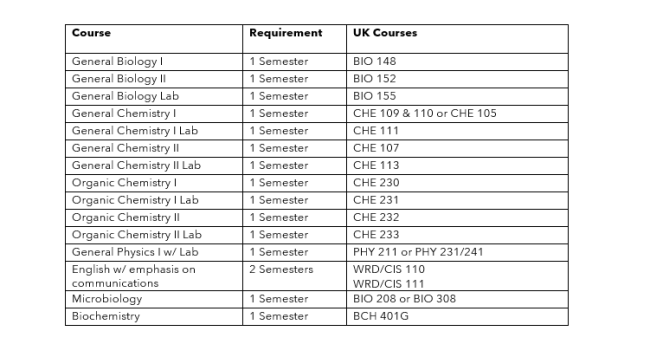
*Please note that Dental school requirements vary from school to school. Research schools early for specific information about requirements.
Applications Process
US dental schools admit students once a year in the fall.
Applications are submitted 12-15 months before your desired dental school enrollment date. This means the application process can begin as early as the spring after your Junior year. However, the timing depends on when you will complete your degree and the necessary coursework (and successfully take the DAT).
Dental school requirements vary from school to school. Research schools early for specific information about requirements.
Dental School Application process includes 5 main components:
- The Dental Admissions Test (DAT)
- Primary Application
- Letters of Recommendation
- Secondary Applications
- Interviews
Application Timeline
February – April
- Draft your personal statement.
- Request letters of evaluation/reference.
- Finalize your Dental Admission Test (DAT) test date. Aim to take the test by the end of spring so scores are ready for the opening of the application window.
May
- The American Dental Education Association Associated American Dental Schools Application Service (ADEA AADSAS) portal opens. You can create an account and enter coursework.
- For schools in Texas students will apply through the Texas Medical & Dental Schools Application Service (TMDSAS).
- Order official transcripts from all colleges and universities that you have attended to be sent to AADSAS.
- Have letters of recommendation sent to AADSAS - check individual schools for specific criteria.
- Finalize the list of schools you plan to apply to.
June – August
- AADSAS application submission opens in early June. Try to submit your application as soon as possible.
- Make final decisions on which dental schools to apply to and submit primary applications.
- AADSAS verifies primary applications. This process can take four to six weeks.
- Individual dental schools may require supplemental application materials. Generally, you should try to submit these within two weeks of receiving them.
September – November
- Prepare for and attend interviews.
- Continue to complete and submit secondary applications.
- Send dental schools application updates if acceptable.
- Complete a Free Application for Federal Student Aid (FAFSA) in October.
December – February
- Dental school admissions committees meet and decide status: accept/reject/waitlist.
- Schools begin extending acceptance offers on December 1st. Depending on the date of an offer of admission, you will have a specific response time.
Application Materials: Letters of Recommendation/Personal Statements
Letters of Recommendation/Support:
Requirements for letters vary between schools, but the AADSAS allows a maximum of four. Begin early to establish a network of professors, supervisors (for volunteer or paid work), and dental providers who are familiar with your work.
It is important to choose recommenders who know you well. Many schools require letters from faculty members who have taught you in a class and are able to make specific observations about your personal/academic achievements and evaluate your potential for success in dental school. Review the requirements from each school carefully as some have detailed instructions for each letter submitted.
Personal Statements:
The personal statement is about you and your motivation for pursuing a career in oral health. Describe your current passion for the field with specific stories from recent experiences. Try to choose a theme rather than random thoughts and avoid referencing information that is duplicated elsewhere in your application. For more information, along with tips and tricks, reference the ADEA.
Entrance Exam
The DAT (Dental Admissions Test) is administered throughout the year at local testing centers. Ideally, the DAT should be taken when you have finished the necessary coursework and have dedicated a minimum of two to four months to content review and practice exams. It is to your advantage to take it early—no later than May in the year you are submitting your application.
For DAT information and registration, visit the American Dental Association's website.
Interviewing
Most dental schools hold interview days where they bring in a group of applicants for a day that may consist of some or all of the following: Interviews, written essays, school tours, and opportunities to meet students and faculty.
Interviews can take many forms, so it is important to research your schools and be prepared for each kind. The Stuckert Career Center can help you with preparation tips and practicing your interviewing skills.
The most common types of interviews are:
- One-on-one: Usually one or two interviews ranging 30-45 minutes.
- Multiple Mini Interview (MMI): 7-10 rooms with a different prompt or scenario posted on the door. You are typically given 2 minutes to prepare before entering the room. Once you enter, you are given 5-8 minutes to respond to the prompt or play out the scenario with a trained actor and ask follow-up questions.
- Group: May be either one applicant interviewed by several interviewers or a group of applicants interviewed by one or more interviewer.
CASPer®
Dental schools incorporate a variety of tools in their assessment to ensure they are not only academically capable but also possess the characteristics of someone who will likely succeed on the job. One such tool that is recommended, and in some cases required, by some dental schools is CASPer®, which is a situational judgment test designed to assess how an individual behavior.
Further information is available here: CASPer®.
Experiences: Involvement/Shadowing/Volunteering
The Experiences section is a core component of the application where you list Academic enrichment, dental experience, dental shadowing, employment, extracurricular activities, research, and volunteer work. It provides admissions committees with a structured look at how you spend your time outside the classroom. To find UK student organizations related to medical school, search BBNVolved.
Volunteering
As a caring attitude is central to the practice of dentistry, applicants should demonstrate a commitment to service, more specifically direct service, and a desire to help others.
Schools
Dental Schools in Kentucky
- University of Kentucky: https://dentistry.uky.edu/
- University of Louisville: https://louisville.edu/dentistry/degrees/dmd
Find a Dental School
https://www.asdanet.org/index/get-into-dental-school/before-you-apply/u-s-dental-schools
Resources
ADEA: American Dental Education Association: http://www.adea.org/godental/
ASDA: American Student Dental Association: https://www.asdanet.org/
ADA: American Dental Association: https://www.ada.org/en